


 Construction
 Transportation
 Manufacturing
 Blog
Blog
 About Us
 Contact Us

 Book a demo
 Free Trial
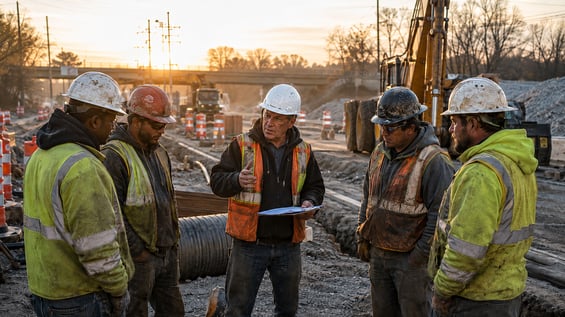

 Return on investment
ROI: how to measure the real value of your investments
Download the ROI guide Free PDF: hours saved per employee and the safety gains
Investing in a new tool, a training program or a new way of communicating is one thing.
Knowing whether that investment genuinely improves your teams' day-to-day work and your company's results is another.
That's exactly where ROI, or return on investment, gets interesting.
Because beyond the numbers in a spreadsheet, ROI answers a fairly simple question:
Is what we're putting in place actually creating value?
For companies with a lot of frontline teams, that question matters even more. Every hour saved, every accident avoided, every better-trained employee and every piece of information delivered more efficiently can have a direct impact on operations.
What exactly is ROI?
Return on investment compares what an initiative costs with what it brings in or allows you to save.
And that return doesn't have to take the form of extra revenue.
It can also show up as:
In other words, measuring ROI takes you from "we think it's working" to "here's what it actually changes".
In the field, a few minutes quickly turn into hours
When a company has dozens, hundreds or even thousands of frontline workers, small inefficiencies add up fast.
A manager has to repeat the same information to several crews.
A worker looks for a procedure that sits in an email they never received.
A training session forces several employees to stop work at the same time.
An internal policy has to travel from supervisor to supervisor before it reaches the site.
On their own, these situations can look trivial.
Multiplied by the number of employees, sites and weeks in a year, they add up to a lot of time.
That's why one of the first things to measure when evaluating the ROI of a tool for frontline teams is often the time it gives back.
7 hrs
saved per employee each month thanks to better information flow.
Results reported by BRIX
And getting time back isn't just about working faster. It lets managers and crews put more energy into the work that really counts.
Safety and training: measuring what you avoid
ROI matters even more when health and safety are on the line.
A workplace accident carries direct costs, of course, but also interruptions, paperwork, absences and repercussions across the team.
Prevention has very real value.
By making training and safety information available directly on mobile, companies can share procedures more easily, reinforce key instructions and let workers review content whenever they need it.
19 %
fewer workplace accidents
23 %
reduction in incident severity
At companies using the BRIX solution
In that context, return on investment isn't measured in dollars alone.
It's also measured in what doesn't happen.
A better-informed employee can work with more autonomy
In the field, waiting for an answer can slow a lot of things down.
Where is the latest procedure? Which training do I need to complete? What is the policy for this situation? Did that instruction change?
When information is scattered across emails, shared folders, texts and several different people, getting an answer takes longer than it should.
BRIX brings communications, training, reminders and important information together in an app built for workers without a desk.
The goal is simple: let employees find what they need without always having to go through a manager.
That autonomy can reduce interruptions, speed up certain decisions and free up time for supervisors.
ROI is measured on the human side too
Not everything that creates value in a company shows up on an invoice.
Engagement, retention and employee experience also carry a cost when they deteriorate.
An employee who doesn't get the information, doesn't feel connected to their organization or sees few opportunities to grow is more likely to disengage or leave.
+10 %
in engagement and retention
$25,000
per year for a disengaged employee
$45,000
in replacement costs when someone leaves
Figures reported by BRIX: recruitment, training and lost productivity
Seen that way, improving the frontline experience isn't simply an HR initiative.
It's a business decision.
Measure to decide better
Good ROI isn't only there to justify a purchase after the fact.
It also tells you where to focus your efforts.
With data on training progress, employee participation and engagement, managers can better understand what's working and what needs adjusting.
That matters especially when teams are spread out.
Without visibility, it's hard to know whether a message actually reached employees or whether a course was completed.
With BRIX, managers can follow that information in one environment and get a clearer view of what's happening in the field.
25 %
more decision-making efficiency.
Customer feedback reported by BRIX
How do you calculate the ROI of your frontline tools?
Before reaching for a calculator, start by identifying the problems you want to solve.
For example:
01How much time do your managers spend each week passing information along?
02How many hours does it take to organize and deliver your training?
03What does onboarding a new employee cost?
04What is the financial impact of workplace accidents and incidents?
05What does staff turnover cost you?
06How many tools do you currently use to communicate, train and engage your teams?
Once those costs are on the table, comparing today's situation with the results after rolling out a new solution becomes much easier.
ROI stops being theoretical.
It becomes specific to your reality.
The best tool isn't the one with the most features
It's the one that solves enough problems to earn its place in your teams' daily work.
For frontline workers, that means easier access to information, being able to follow their training, staying connected to their organization and getting what they need without slowing down the job.
For managers, it means fewer repetitive tasks, more visibility and better data to base decisions on.
And for the company, it means being able to measure whether the investments made are producing the expected results.
Because in the end, ROI isn't simply a financial formula.
It's a way of making sure every dollar, every hour and every new tool genuinely helps people do the work better.
Calculate the potential return of BRIX in your organization
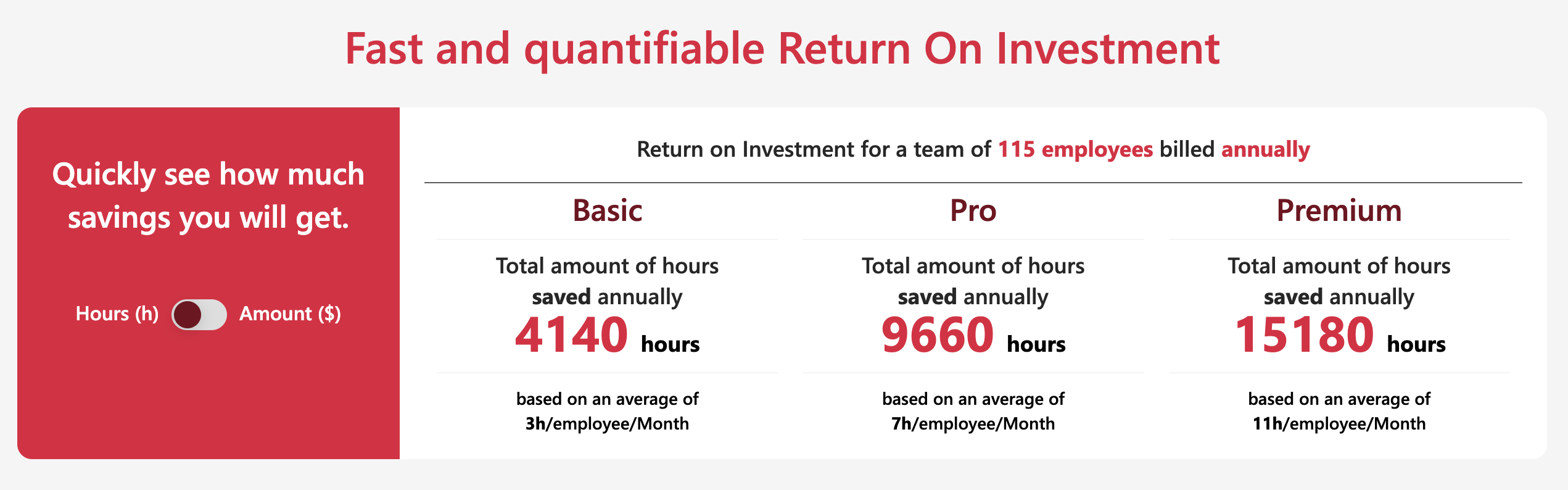
Every company is different. Headcount, current processes, training costs, turnover and communication challenges can change the calculation completely.
That's why the best ROI is the one based on your own data.
BRIX built a guide to help you identify the main potential gains and estimate the impact the platform could have in your organization.
You can also book a demo with our team to see exactly how BRIX fits the reality of your frontline crews.


Comment augmenter l'adoption des applications de formation terrain en 2027
Pourquoi les applications de formation terrain restent-elles sous-utilisées ? Les équipes terrain n'ont pas le luxe d'un bureau, d'une connexion.


Qu'est-ce qui empêche les travailleurs terrain d'utiliser les applications de formation ?
Qu'est-ce qui empêche les travailleurs terrain d'utiliser les applications de formation ? Accès, temps, pertinence : les trois freins qui tiennent.

7 échecs de plateformes terrain dans les entreprises industrielles
7 raisons pour lesquelles les plateformes terrain échouent à grande échelle 80 % de la main-d'œuvre mondiale travaille sur le terrain, souvent sans.


